
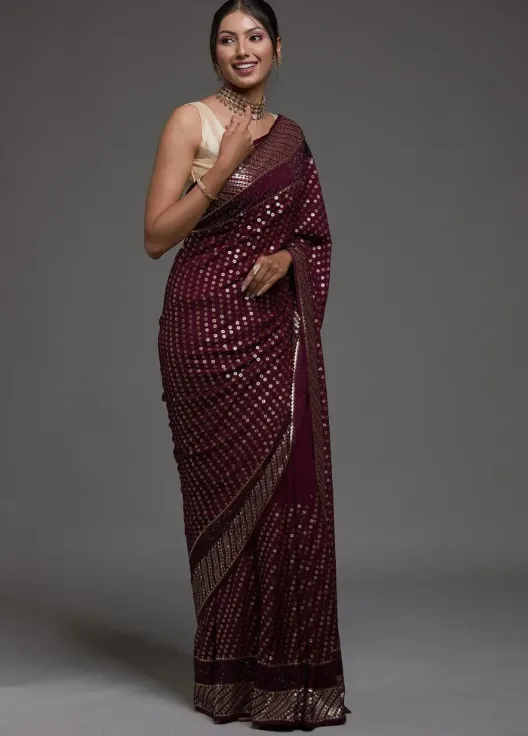
The gallery doors open in an hour, and your paintings are finally hanging where strangers can see them. You want to look festive without feeling dressed for someone else’s ceremony. A Maroon Saree offers rich colour for an opening-night reception, while purple brings another kind of depth. The best choice depends on more than the shade beside your face. Think about the artwork behind you, the hours spent greeting visitors, and the drape that will let you move naturally between conversations.
Read the Gallery Invitation
Ask the organiser how the evening will unfold. Some openings begin with a short introduction, followed by a slow walk around the exhibition; others move straight into informal conversations. Find out whether you will stand near your work or greet everyone by the entrance. A crowded room with narrow passages calls for a hem that clears your shoes and a pallu you can control. Check the expected formality too. A quiet gallery gathering rarely needs the elaborate styling of a wedding reception.
Choose the Maroon Motif
One maroon design uses a polyester-viscose Chanderi-style fabric with Kalamkari-inspired prints in wine, plum, beige and soft grey. Gold zari along the border gives the motifs a defined finish. The listed drape measures 5.5 metres, so there is enough fabric to arrange a traditional pallu. Beside colourful paintings, this patterned option could feel lively; beside a densely detailed artwork, its motifs may compete for attention. Stand against a photograph of your exhibition wall and see which effect you actually enjoy.
Let Purple Frame the Look
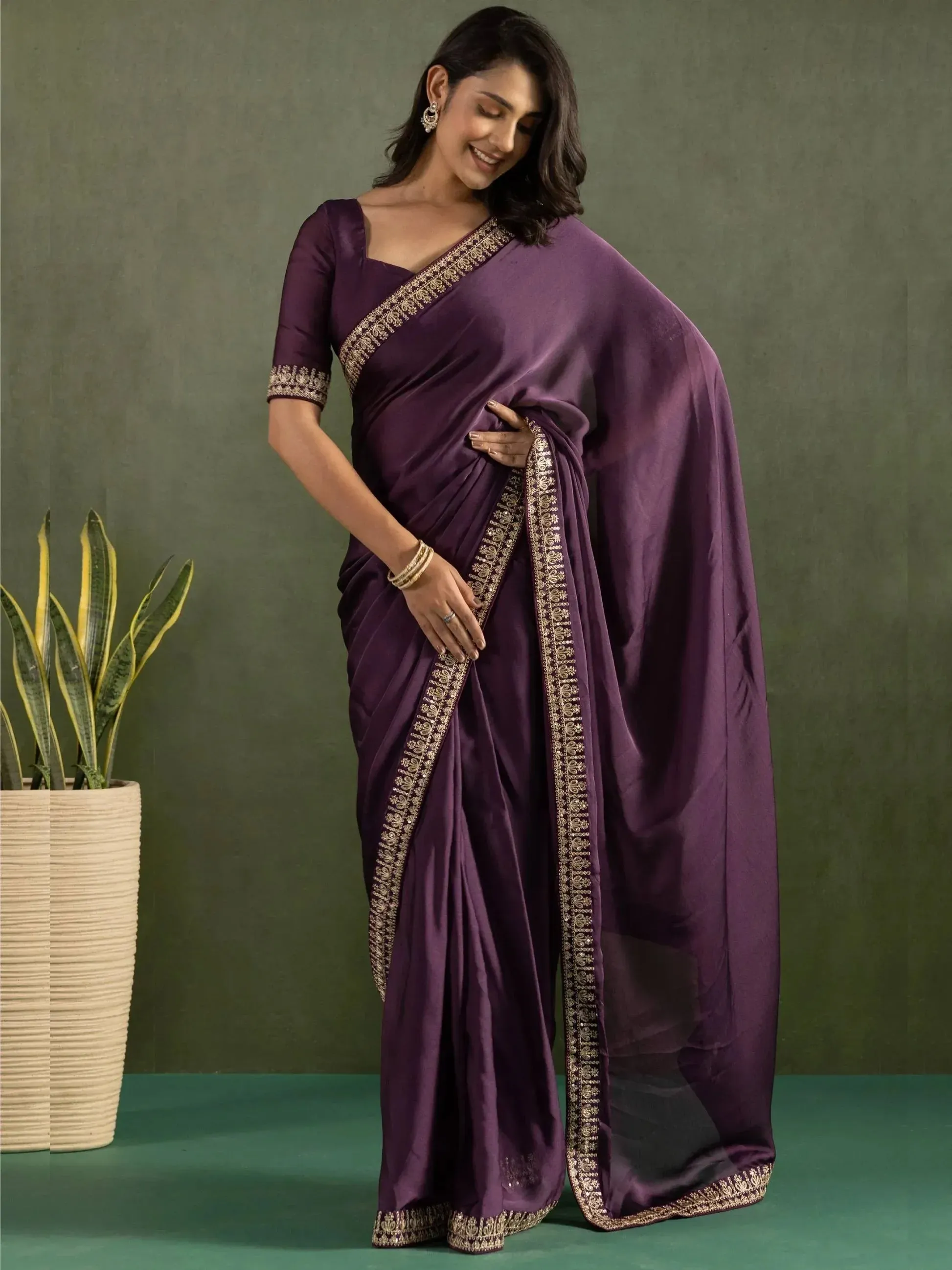
A Purple Saree offers a different approach through a deep aubergine silk design with floral thread embroidery along its border and pallu. It comes with a contrasting rani-pink blouse piece, listed at one metre, while the saree measures 5.5 metres. The stronger colour block can make a simple outline against a pale gallery wall. If your art includes pink accents, the blouse might echo them without matching any painting exactly. Keep the pallu arranged so its embroidered border remains visible when you turn.
Consider the Blouse Early
Decide on the blouse before planning accessories. A contrast blouse can connect an outfit to the exhibition palette, but only if you enjoy wearing that colour close to your face. An unstitched blouse piece still needs a fitting, even when the product photograph shows a finished neckline. Ask the tailor to check the sleeves while you reach forward, as you might when pointing out a detail in a painting. Keep jewellery clear of raised embroidery, especially near the shoulders where your pallu rests.
Move Comfortably Around Displays
Spend a few minutes walking in the complete outfit before the event. Turn between two chairs, step aside to make room for another guest, and hold a glass while greeting someone. Long earrings can brush a decorated pallu, while a loose scarf may swing towards displays. Secure the folds at a sturdy blouse seam rather than pinning through delicate threadwork. If the gallery has rules about keeping distance from artworks, follow them throughout the reception. The outfit should make those movements easier, not harder.
Pack for the Opening
An opening reception rarely provides much space for coats, shopping bags or spare accessories. Choose a small handbag that closes securely and does not scrape against the saree border. If you expect to give a short introduction, keep your notes folded somewhere accessible rather than under loose jewellery. Make a quick check before leaving home so you are not hunting for something in the gallery’s preparation area. These essentials cover the evening without turning your bag into another item you must manage.
-
Secure shoulder pin.
-
Small zipped handbag.
-
Comfortable closed-back shoes.
-
Folded opening remarks.
-
Soft pouch for jewellery.
Conclusion
Your first exhibition opening will probably pass in a blur of introductions, questions and unexpected reactions to your work. Choose the saree that lets you listen without tugging at its shoulder or worrying about the hem. Before the doors open, stand beside one painting and let a friend take an ordinary photograph, just for you. Then put the phone away and speak with the people who have come to look. Their questions may stay with you much longer than the colour you wore.